Virtual Reality Therapy | What Is It And How Does It Work?
Virtual reality therapy offers a new dimension of healing for people struggling with anxiety, trauma, and phobias. Instead of imagining stressful situations, patients experience them in realistic but controlled environments
Author:Daniel BarrettOct 01, 2025111 Shares110.7K Views
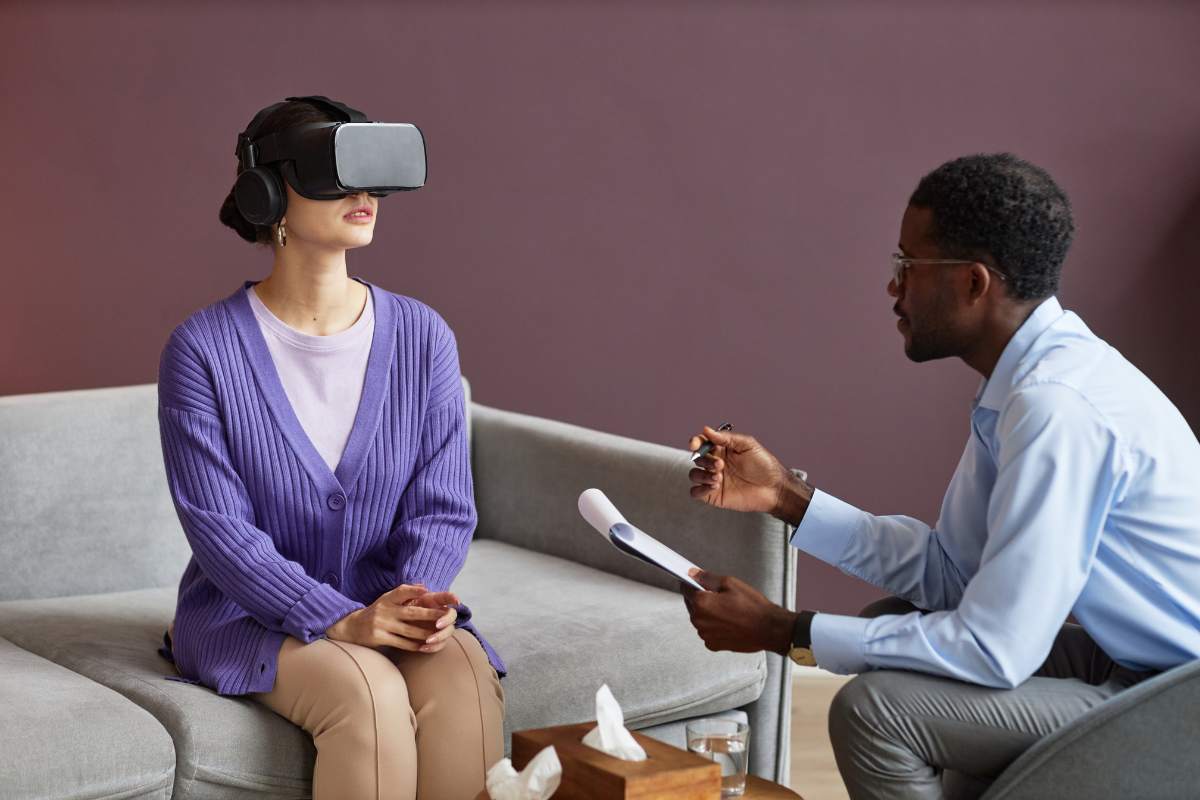
How VR Technology Revolutionizes Mental Health Care
Picture a therapy session where a patient can safely confront their fear of heights through a realistic virtual environment, guided step by step by a trained clinician. In another setting, an individual can rehearse stressful social or workplace interactions in a controlled, immersive space designed to build confidence and emotional resilience. These experiences illustrate how virtual reality is reshaping the landscape of mental health care.
Extensive research confirms that VR-based therapies deliver results comparable to and in some cases surpassing traditional exposure methods. Its true innovation lies not only in technological advancement but in its ability to remove long-standing barriers to treatment, offering precision, accessibility, and a new level of therapeutic engagement that traditional approaches often struggle to achieve.
Understanding Virtual Reality Therapy And How It Works
What Makes VR Therapy Different
Virtual reality therapy represents one of the most exciting frontiers of technology in medicine, showing how digital tools can complement traditional psychological care. It uses digitally created environments where patients navigate and complete specially designed tasks tailored to treat specific conditions, isolating users from surrounding sensory inputs to create immersive experiences. Unlike simply imagining scenarios or viewing videos, VR places you inside three-dimensional worlds that feel remarkably real to your brain.
When you wear a VR headset, sensors follow your head movements and change what you see, making it feel like you are really somewhere else. Your brain reacts physically as your heart rate changes, your palms may sweat, and you feel real emotions, even though you know you are safe in a therapist’s office.
This neurological reality provides the foundation for therapeutic effectiveness. Your brain can learn, practice, and heal within these virtual spaces in ways that translate directly to real-world improvement.
Core Components Of VR Treatment Sessions
Modern VR therapy combines several key elements that work together:
- Immersive environmentstransport you into specific scenarios relevant to your treatment goals. These might include virtual airplanes for flight anxiety, crowded social spaces for social phobia, or calming nature scenes for relaxation training.
- Therapist guidanceremains central to the process. Therapists can see exactly what patients experience in the virtual environment, allowing them to monitor engagement, adjust difficulty levels, and provide real-time support. You're never alone in the experience.
- Graduated exposureallows controlled progression through increasingly challenging scenarios. Someone working through fear of heights might start with a low balcony view before advancing to taller buildings, with each success building confidence and reducing anxiety.
- Real-time biofeedbackoften accompanies VR sessions, with therapists monitoring heart rate, breathing patterns, and other physiological indicators to gauge stress levels and adjust treatment intensity appropriately.
How VR Activates Therapeutic Change
The effectiveness of VR therapy rests on established psychological principles, particularly extinction learning and cognitive restructuring. When you repeatedly face a feared situation in VR without the anticipated negative outcome, your brain begins rewiring its threat assessment. The conditioned fear response weakens, replaced by new learning that contradicts old anxieties.
Simultaneously, VR allows direct testing of catastrophic predictions that often fuel anxiety. If someone with social anxiety fears they'll humiliate themselves when speaking in groups, practicing presentations to virtual audiences demonstrates the unrealistic nature of those fears. Experience trumps abstract discussion every time.
The immersive quality of VR amplifies these effects. Virtual reality creates physiologically and emotionally evocative experiences, making it a valuable tool for mental health treatment. Your brain's emotional centers respond to VR stimuli much as they would to real situations, allowing genuine learning and adaptation.
Conditions Successfully Treated With VR Therapy
Anxiety Disorders And Specific Phobias
Research shows VR exposure therapy produces large declines in anxiety symptomsand demonstrates similar efficacy compared to traditional exposure interventions. The technology has proven particularly effective for specific phobias that are difficult to address through conventional methods.
Fear of flying is a perfect example of how VR can help. Airlines can’t offer practice flights for therapy, so traditional exposure methods are difficult. VR can recreate the whole flying experience, from checking in at the airport to takeoff, turbulence, and landing. This allows patients to face their fear step by step and go through many “flights” without ever leaving the ground.
A 2022 review of 18 studies found that VR exposure therapy improved nearly all types of specific phobias, including fears of animals, blood, and injections. Fears of heights, public speaking, driving, spiders, and needles that once greatly affected people’s lives now respond well to VR therapy.
Social anxiety disorder also responds well to VR treatment. Virtual environments simulate job interviews, parties, presentations, and other socially challenging situations. Patients can practice social and emotional skills in VR, safely testing new approaches while receiving therapist guidance. The ability to replay scenarios until confidence builds represents a significant advantage over traditional role-playing exercises.

Post-Traumatic Stress Disorder (PTSD)
PTSD treatment requires carefully controlled exposure to trauma memories, a process traditionally difficult and potentially risky. A 2019 meta-analysis comparing VR exposure therapy to no treatment found that VR reduced PTSD symptoms, with benefits continuing for at least three months after treatment ended.
VR creates realistic environments connected to traumatic experiences, such as battlefields for veterans, accident scenes for survivors, or other similar situations. In these safe and controlled settings, patients can face and process painful memories with the support of a therapist. The therapist manages every detail and adjusts the level of intensity based on how ready the patient feels and how they respond.
This graduated approach allows trauma processing that might otherwise feel overwhelming. Veterans who couldn't discuss their experiences in traditional talk therapy often engage more readily when VR provides contextual cues that facilitate memory access and emotional processing.
Depression And Mood Enhancement
The use of VR for depression highlights how tech is reshaping healthcare, allowing patients to experience natural environments and emotional renewal without leaving home. These innovations demonstrate how mental health professionals can harness immersive tools to deliver therapeutic benefits once thought impossible through conventional methods.
Virtual environments can recreate activities that improve mood, such as nature walks, gardening, or spending time with animals, for people who cannot do these things in real life. Someone who is homebound because of severe depression can “visit” peaceful beaches or forests and still gain the calming benefits of being in nature.
VR also helps teach and practice CBT techniques through visual, experiential learning. Abstract concepts like thought challenging or behavioral activation become concrete when practiced in simulated real-world scenarios.
Why VR Works When Other Approaches Fall Short
Several factors contribute to VR therapy's effectiveness beyond simple novelty:
- Control and safetyrepresent primary advantages. Therapists can pause, replay, or modify scenarios instantly. Someone overwhelmed during exposure can take immediate breaks, then resume when ready. VR allows therapists to control different aspects of patients' experience during exposure, minimizing distress risk and maximizing success chances.
- Engagement and motivationincrease significantly with VR. The immersive, interactive nature captures attention more effectively than imaginal exposure, where patient engagement remains uncertain. Many people, particularly younger individuals, find VR intuitively appealing, reducing treatment resistance.
- Repeatabilityenables practice that would be impossible otherwise. Flying phobia treatment might require months or years of actual flights, costing thousands of dollars. VR allows unlimited practice sessions at minimal additional cost once equipment is purchased.
- Standardizationimproves treatment quality. With VR exposure therapy, therapists can see what patients see in the virtual environment, addressing four limitations of imaginal exposure: not everyone imagines well, imaging ability declines with age, patient imagery may be too frightening, and therapists cannot control what is being imagined.
Neurological Mechanisms Of VR Healing
Brain imaging studies reveal why VR therapy works at a neurological level. Virtual experiences activate the same neural pathways as real experiences, particularly in emotional processing centers like the amygdala and hippocampus. Your brain largely cannot distinguish between well-designed VR scenarios and reality.
This connection in the brain means that what you learn in VR carries over to real life. When you face your fear of heights in a virtual setting, your brain starts to change how it reacts to real heights. The learning that happens in VR, where you repeatedly face your fears without anything bad happening, helps create lasting changes in the brain that control fear and emotions.
What To Expect During VR Therapy Sessions
Initial sessions typically begin without VR as therapists assess your condition, establish treatment goals, and explain how VR will supplement traditional therapy techniques. VR therapy does not replace standard mental health treatments; instead, most clinicians use it as an additional treatment approach.
When VR begins, therapists start with orientation and comfort-building. You'll try the headset in neutral, relaxing environments while learning basic controls. This familiarization reduces technology anxiety and establishes comfort before addressing therapeutic content.
Actual treatment sessions combine traditional therapy dialogue with VR exposure or practice. You might spend 20-30 minutes in virtual environments while your therapist monitors your responses, offers encouragement, and guides processing of the experience. After removing the headset, you'll discuss what occurred, practice skills learned, and plan next steps.
The number and length of sessions are similar to traditional therapy, usually once a week for about 50 to 60 minutes over several months. The VR part is used for only part of each session, not the whole time.
Advantages Of VR Therapy Over Traditional Approaches
Overcoming Logistical Barriers To Treatment
Traditional in vivo exposure is often difficult or impossible to arrange inside the office and usually impractical outside the office, while imaginal exposure leaves therapists unable to know or control what patients imagine. VR eliminates these constraints entirely.
Think about treating claustrophobia. Traditional therapy means finding small spaces and convincing patients to go into them many times. VR can instantly create virtual elevators, closets, or MRI machines, with full control over size, timing, and exit options. This makes the process much easier and more practical.
Geography no longer limits treatment options either. Someone in a rural area with no tall buildings nearby can still address fear of heights through VR. Military veterans can process combat trauma without traveling to war zones. The scenarios come to patients rather than vice versa.
.Increased Treatment Acceptance and Reduced Dropout
Therapists say that VR helps provide exposure therapy to patients who may not respond well to other methods. The feeling of safety, knowing you can take off the headset at any time, makes it easier for people to start treatment.
Many patients find VR exposure less threatening than real-world exposure initially, even though effectiveness remains equivalent. This reduced initial anxiety increases treatment engagement, getting people started who might otherwise avoid or delay care. Once they experience success with VR exposure, confidence builds for real-world application.
The technology itself attracts certain demographics, particularly younger adults who grew up with digital media. For these individuals, VR feels more comfortable and relevant than traditional talk therapy alone, improving engagement and therapeutic alliance.
Making VR Therapy Work For You
Is VR Therapy Right For Your Situation?
Beyond treating anxiety and trauma, VR therapy also supports workplace wellnessinitiatives by helping employees manage stress, build resilience, and practice coping techniques in realistic scenarios. Companies increasingly adopt these tools to promote mental well-being and prevent burnout among staff.
The approach particularly suits people who:
- Have clearly identifiable fears or situations they avoid
- Prefer active, experiential learning over purely verbal therapy
- Feel motivated by technology and interactive approaches
- Have tried traditional therapy with limited success
- Face practical barriers to traditional exposure therapy
VR may not be the best first option if you have severe depression without anxiety components, primarily internal rather than situational symptoms, or physical conditions preventing VR use. Discuss options with mental health professionals to determine appropriate treatment paths.

Questions To Ask Potential VR Therapists
When evaluating therapists offering VR therapy, gather information about:
- Training and experience: How did they learn VR therapy? How many patients have they treated using VR? What outcomes do they typically see?
- Technical capabilities: What VR system do they use? What scenarios and conditions can they address? How do they handle technical problems?
- Treatment approach: How do they integrate VR with other therapeutic techniques? What does a typical treatment course look like? How do they measure progress?
- Practical logistics: What does VR therapy cost? Does insurance cover it? How long are sessions? What happens if VR causes discomfort?
Quality therapists welcome these questions and provide clear, confident answers demonstrating both clinical expertise and technological competence.
Maximizing Your VR Therapy Experience
Start VR therapy with realistic expectations. Results do not happen overnight, as effective treatment usually takes several sessions over weeks or months. It’s important to trust the gradual process and avoid jumping too quickly into intense situations.
Communicate openly with your therapist about your experiences, both positive and challenging. Report any cybersickness immediately so sessions can be adjusted. Share when scenarios feel too easy or too difficult, enabling appropriate pacing.
Practice skills learned in VR within real-world situations between sessions. VR creates a bridge to reality, but crossing that bridge requires deliberate effort. Your therapist will guide you in applying virtual experiences to actual life circumstances.
Keep realistic expectations about the technology. VR can create strong and helpful experiences, but small glitches can sometimes happen. Don’t let these technical issues stop your progress; focus on your overall improvement instead of expecting every session to be perfect.
FAQs About Virtual Reality Therapy
How Long Does VR Therapy Typically Take To Show Results?
Most people notice initial improvements within 4-6 sessions, though complete treatment often requires 8-12 weeks. Results vary based on condition severity and individual factors.
Can VR Therapy Make My Anxiety Worse?
When used correctly by trained professionals, VR therapy should not make anxiety worse. Therapists control the level of exposure carefully, starting with easy situations and moving up slowly. You can always stop or take off the headset if it feels too intense.
Is VR Therapy Safe For Children And Adolescents?
Research supports VR therapy safety and effectiveness for adolescents, typically those 13 and older. Younger children may benefit from VR therapy, but considerations include comfort with the technology, ability to communicate experiences clearly, and ensuring age-appropriate content.
What Happens If I Experience Motion Sickness During VR?
Mild motion sickness affects some users initially but typically improves with repeated exposure. If you feel nauseated, immediately inform your therapist, who can adjust settings, switch to different scenarios, or end the VR portion early.
How Does VR Therapy Compare To Medication For Anxiety?
VR therapy and medication treat anxiety in different ways. VR helps change thoughts and behaviors, while medication affects brain chemistry. Neither is automatically better; many people benefit from using both together.
Conclusion
Virtual reality therapy represents genuine innovation in mental health care, not merely a technology gimmick. Rigorous research demonstrates effectiveness matching or exceeding traditional approaches for anxiety disorders, PTSD, and specific phobias.
The technology solves long-standing problems that have made mental health treatment difficult for many years by making challenging exposures possible, improving access to therapy, and giving therapists greater control and safety during sessions. These strengths lead to real improvements for real patients.

Daniel Barrett
Author
Daniel Barrett is a tech writer focusing on IoT, gadgets, software, and cryptocurrencies. With a keen interest in emerging technologies, Daniel offers expert analysis and commentary on industry trends. Follow him for authoritative insights into the latest tech innovations.
Latest Articles
Popular Articles